





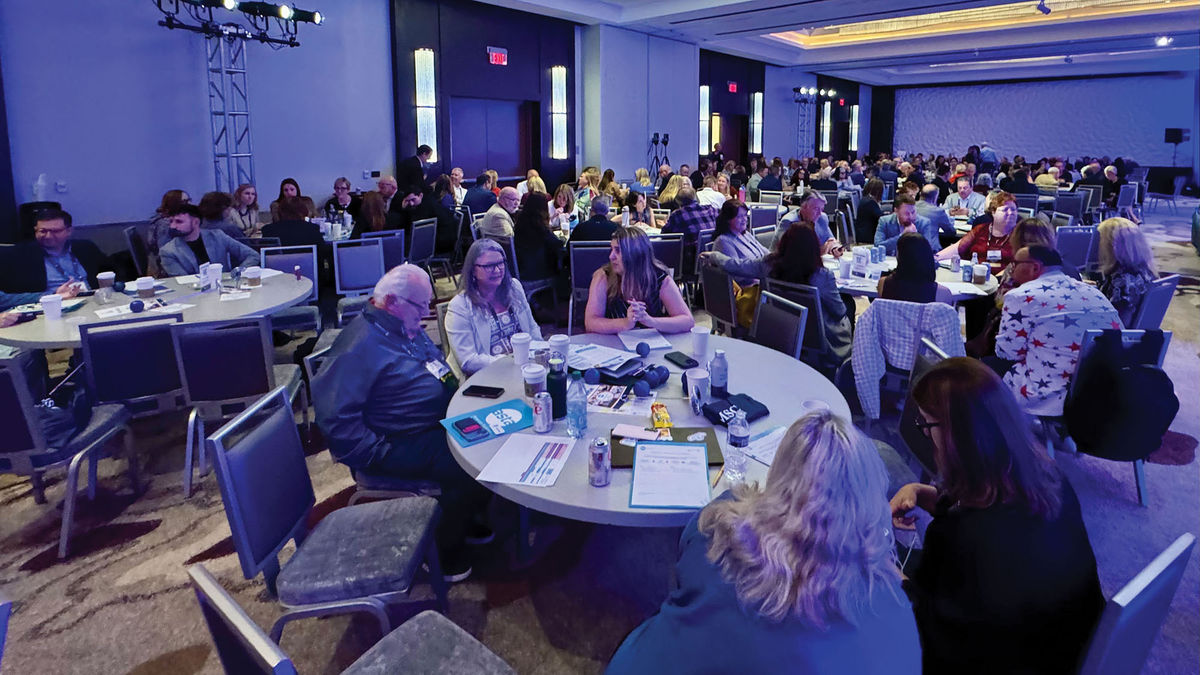
WASHINGTON, D.C. — This year, attendees of ASTA’s annual Legislative Day received a full day of training before meeting with lawmakers on Capitol Hill on Wednesday.
The extended training was no fluke: Attendees in the past have regularly said they want more time to practice their pitches before their meetings on the Hill.
“We’re spending a lot more time this time around role-playing for congressional meetings and getting to know your delegation,” Klement said in an interview. “No matter how much time we set aside for role-playing, the survey results have always been, ‘We need more time. We need more time together. We need a mock meeting.'”
Legislative Day is ASTA’s annual congressional fly-in, where members are invited to Washington for a series of meetings with members of Congress to discuss the industry and policy priorities.
ASTA president and CEO Zane Kerby said the event was relaunched in 2017, when it had 27 participants. This year, more than 200 participants from 43 states were scheduled to meet with lawmakers. And while about 20 meetings were canceled due to the federal government shutdown, the majority were still scheduled for Wednesday. Canceled meetings will be rescheduled and held virtually.
Tuesday marked a full day of training for attendees following Monday’s Travel Industry Forecast at the National Press Club.
The day started with an overview of the logistics of navigating the U.S. Capitol, as well as tips and tricks for the most effective meetings with members of Congress and their staff. Attendees grouped by state were given the chance to meet with each other and formulate plans for their congressional meetings.
In the afternoon, David Lusk, founder and CEO of Key Advocacy, spoke about the importance of advocacy and how to effectively tell a story. A panel of Capitol Hill staffers shared their insights into constituent meetings. Lusk and Laura Vogel, ASTA’s director of advocacy, led attendees through an exercise designed to hone their message.
This year, ASTA has targeted three main issues for discussion. The first is the proposed Flight Refund Fairness Act, which would ensure travel agencies are not on the hook for paying refunds for canceled flights when they are the merchant of record for the transaction. A Department of Transportation rule adopted in April 2024 requires the merchant of record to refund passengers, even though travel agencies usually don’t have the funds to do that. Agencies are the merchant of record when they purchase air tickets in bulk and resell them at a markup.
The Flight Refund Fairness Act would give airlines seven days to reimburse the ticket agent and another seven days for the ticket agent to refund the client.
ASTA also seeks support for the ACPAC Modernization Act, which would provide a seat on the Aviation Consumer Protection Advisory Committee for a travel advisor. Currently, the committee has a representative from a U.S. airline, consumer group, airport and state or local government, but there is no travel advisor representative.
Finally, ASTA seeks support for the Modern Worker Empowerment Act. Right now, multiple tests are used to determine a worker’s classification as an employee or an independent contractor. The Modern Worker Empowerment Act harmonizes those tests into a single federal standard.
link




More Stories
Laptop prices could jump dramatically this year as RAM shortages and rising CPU costs squeeze notebook makers worldwide
Loblaw confirms data breach – Canadian retail giant says ‘basic customer information’ affected
How to Make a Killing review: a serial killer story should not be this boring